When you’re stranded in the woods, the last thing on your mind is food — it’s shelter. Rain, cold, and wind can kill you in a matter of hours if you don’t have protection. Learning how to build a bushcraft shelter may save your life when things go wrong.
Here, we’ll deconstruct exactly what you need to know: from finding the ideal location to building a good, weather-tight shelter — regardless of whether you start with nothing but a good knife and the environment.
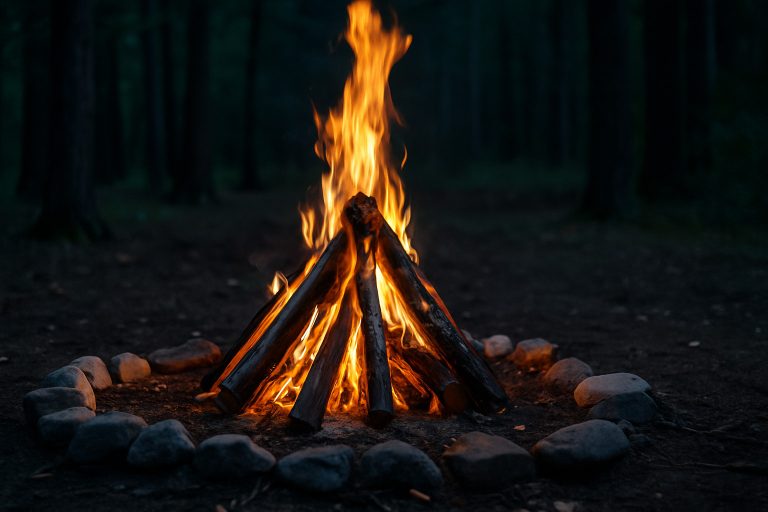
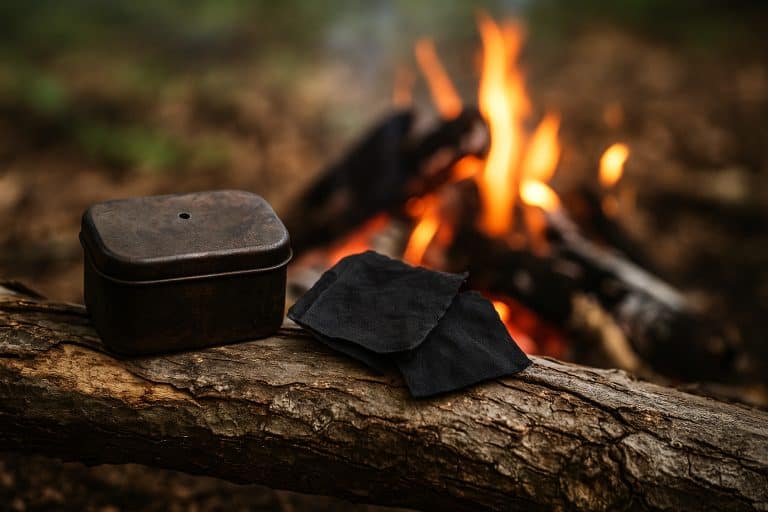
Before you head into the woods, don’t forget to cover the basics, too. You’ll want fire-starting gear you can count on — check out our bushcraft fire kit guide to equip your survival kit.
Why Shelter is Your #1 Survival Priority
You can survive days without food and water, but exposure will kill you in a matter of hours. Hypothermia, heat exhaustion, or sun dehydration all happen faster than you realize. A well-built shelter gives these advantages:
- Warms your body
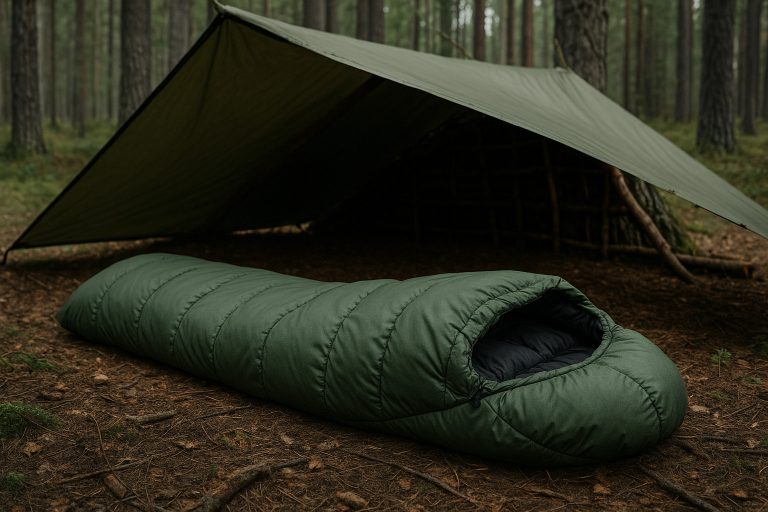
- Protects you from wind, rain, or snow
- Psychologically gives an advantage by giving you a “safe zone”
Hypothermia may begin in temperatures up to 50°F, the National Park Service states, if you’re wet and exposed. Shelter is not an option — it’s necessary.
Choosing the Right Location
Choosing the right location is one of the most critical elements of how to build a bushcraft shelter successfully.
A bad location can turn a great shelter into a killer trap. When choosing a location:
- Look for high, level ground to avoid flooding.
- Find natural windbreaks like fallen trees, thickets, or rock faces.
- Steer clear of widowmakers — dead trees or branches that can fall on you.
- Stay close enough to water (but not close enough to invite flooding or wildlife problems).
A few extra minutes picking the right spot makes building — and surviving — simpler.
Simple Materials for Building a Bushcraft Shelter
In a survival situation, you work with what’s available. Ideally, you’ll gather:
- One sturdy ridge pole (shoulder high and solid)
- Two Y-branches for the side poles (unless you’re tying between trees)
- Plentiful leafy branches (pine boughs, brush, etc.)
- Framing deadwood
- Leaf litter, moss, pine needles for insulation
When cutting materials for building a bushcraft shelter, sturdy supports and thick, natural insulation should be the priority.
👉 To process branches easily and cut supports, a good knife is essential. Check out our review of the best bushcraft knives under $50 for affordable options.
Step-by-Step: How to Construct a Simple Lean-To Shelter
1. Get Your Materials Together
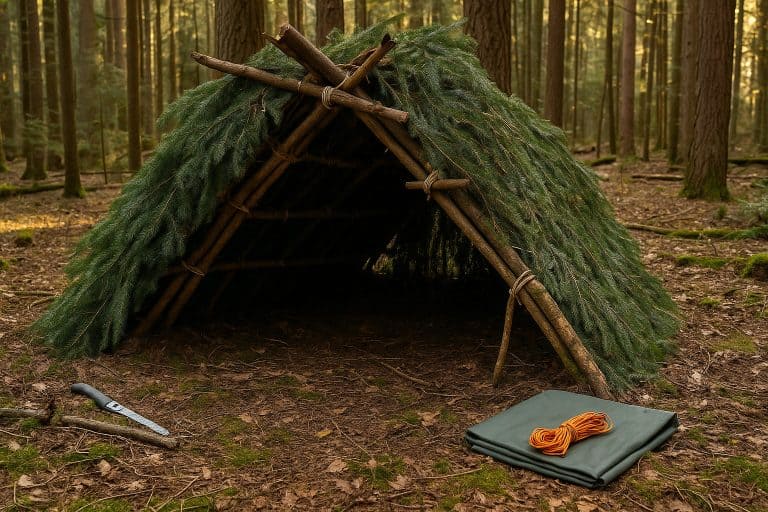
Get all the materials together first: ridge pole, Y-branches, cross poles, and plenty of leafy debris.
2. Create the Frame
Lay the ridge pole horizontally on two strong Y-branches or between two adjacent trees.
3. Install Crossbeams
Lean long branches against the ridge pole at a 45-degree angle to create the roof frame.
4. Insulate with Coverings
Shroud crossbeams with layered leaves, moss, and pine branches tightly. The more weight, the better — aim for an absolute minimum of a foot of debris.
5. Add Ground Insulation
Create a tight bed of dry pine needles or leaves inside your shelter to insulate from ground cold.
Shelter Extensions for Different Conditions
Once you have a grasp on how to build a bushcraft shelter with a basic lean-to design, you can alter your designs based on your environment:
- Debris Hut: Lean-to variant, fully enclosed, ideal for cold country.
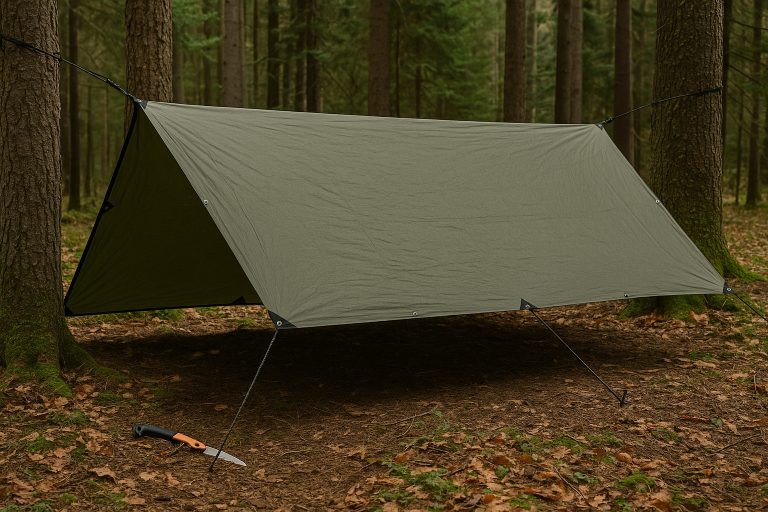
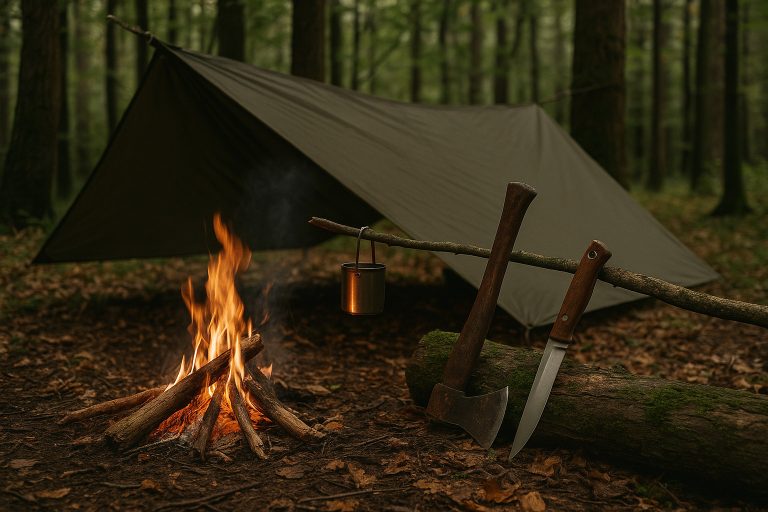
- Tarp Shelter: Simple if you have a tarp and paracord — check out Backpacker’s tarp guide.
- Snow Cave: In deep winter, snow caves are saviors — but very dangerous if inexperienced.
Train in different styles depending on where you backpack.
Final Bushcraft Shelter Success Tips
- Build smaller shelters: large enough only to squeeze you in tightly. Smaller shelters are more insulating.
- Consider wind direction when building — have your entrance facing downwind if possible.
- Waterproofing is important: put debris in such a way that rain runs off and away, not in.
- Start early: Always begin building shelter at least 2–3 hours before sunset.
Closing Thoughts
Knowing how to build a bushcraft shelter is one of the key survival skills. It’s not high-tech gear or complicated designs — it’s being resourceful with the world to protect yourself.
Practice building a few shelters prior to your next trip when the weather is nice. Being able to do this skill proficiently could mean the difference between life and death when the weather turns sour.
👉 Ever built a survival shelter yourself? Share your experience in the comments — we’d love to hear how you went!