Imagine you’re a few miles into the woods. The temperature drops. The clouds are threatening. You’ve got a couple hours of daylight left, and the wind is picking up. You’re not in danger yet—but if you don’t act soon, you will be.
Knowing how to build a bushcraft shelter that is reliable could mean the difference between a good night’s sleep and hypothermia. In this post, I’ll walk you through step-by-step how to build your own survival shelter with minimal tools, some natural materials, and a little know-how.
Whether you’re prepping for emergencies or just want to get closer to nature, this guide will show you how to stay warm, dry, and protected.
🧭 Step 1: Pick the Right Spot
Shelter starts with location. This is not the time to pick the flattest, prettiest patch of ground. You’re looking for:
- High ground, not valleys where water collects
- Natural windbreaks, like large rocks, downed trees, or thick brush
- Overhead protection from rain or falling debris
- Good drainage (avoid muddy or swampy ground)
- And always: Look up—avoid “widowmakers” like dead branches overhead
If you’re planning to build a fire nearby, consider smoke direction and proximity to your bushcraft tarp or other flammable materials.
🪓 Step 2: Gather Your Materials
This part makes or breaks your shelter. You’re looking for three things:
1. Framework Wood
Long, sturdy branches for the main structure. Thumb-thick and about 5–7 feet long. Deadfall is fine if it’s not brittle.
- A folding saw like the Bahco Laplander is your best friend here.
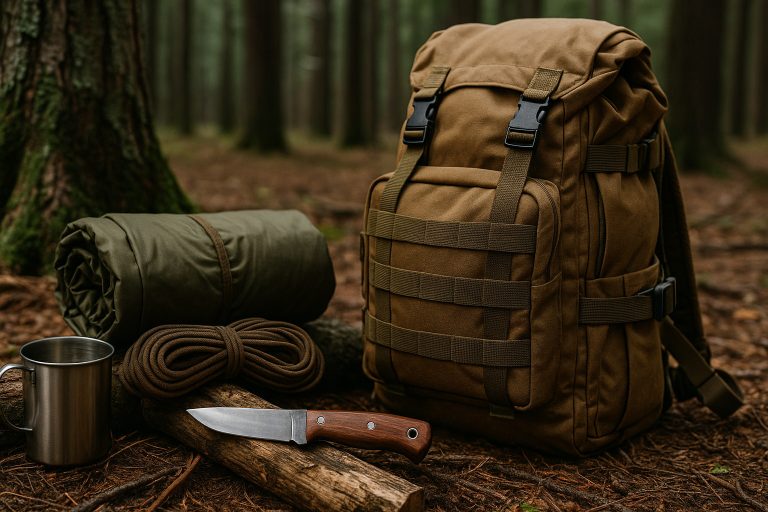
- A fixed-blade knife will help strip bark or notch joints. I cover those in our knife guide.
2. Cordage
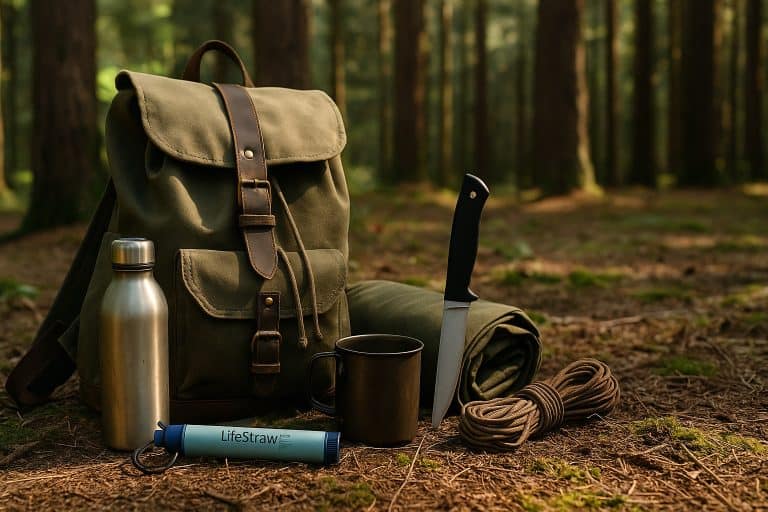
You can lash poles together with vines in a pinch, but I highly recommend stashing a hank of paracord in your pack.
3. Insulation & Covering
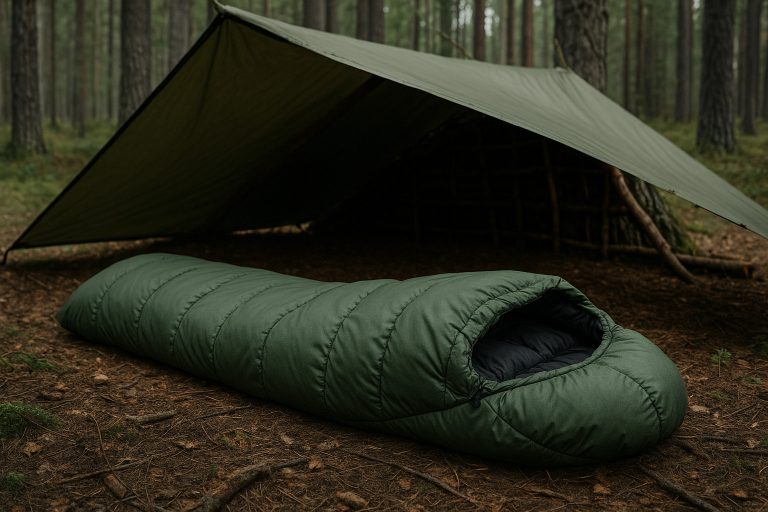
Dry leaves, pine needles, branches with foliage, or—if you’ve got one—a good bushcraft tarp. This outer layer will keep out the wind and rain.
🏗️ Step 3: Build the Frame (Lean-To Style)
There are dozens of shelter types, but let’s start with a lean-to. It’s easy, fast, and works well with a tarp or natural insulation.
Here’s how to do it:
- Prop one long branch between two trees about waist height. This is your ridgepole.
- Angle shorter branches against the ridgepole to form the “lean” part. These are your ribs.
- Lash or wedge the ribs in place. Use paracord or carve notches if needed.
At this point, you have the skeleton of your shelter.
🍂 Step 4: Add the Insulation
This is what keeps you alive—not the frame, but the layers you add to it.
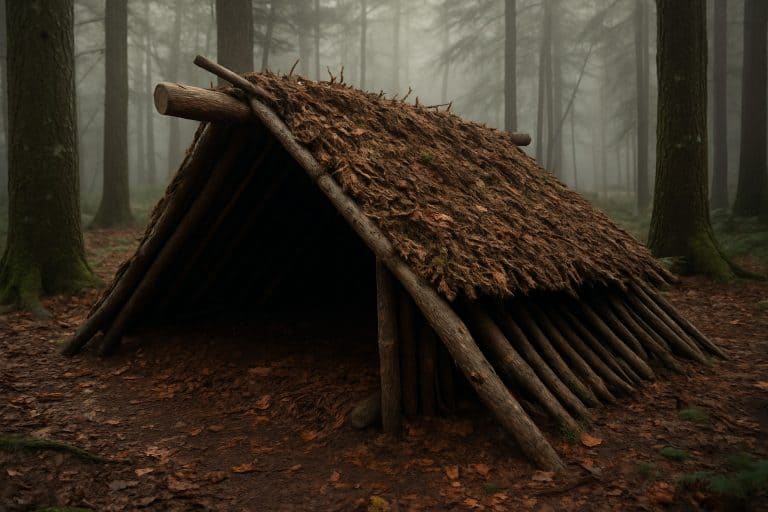
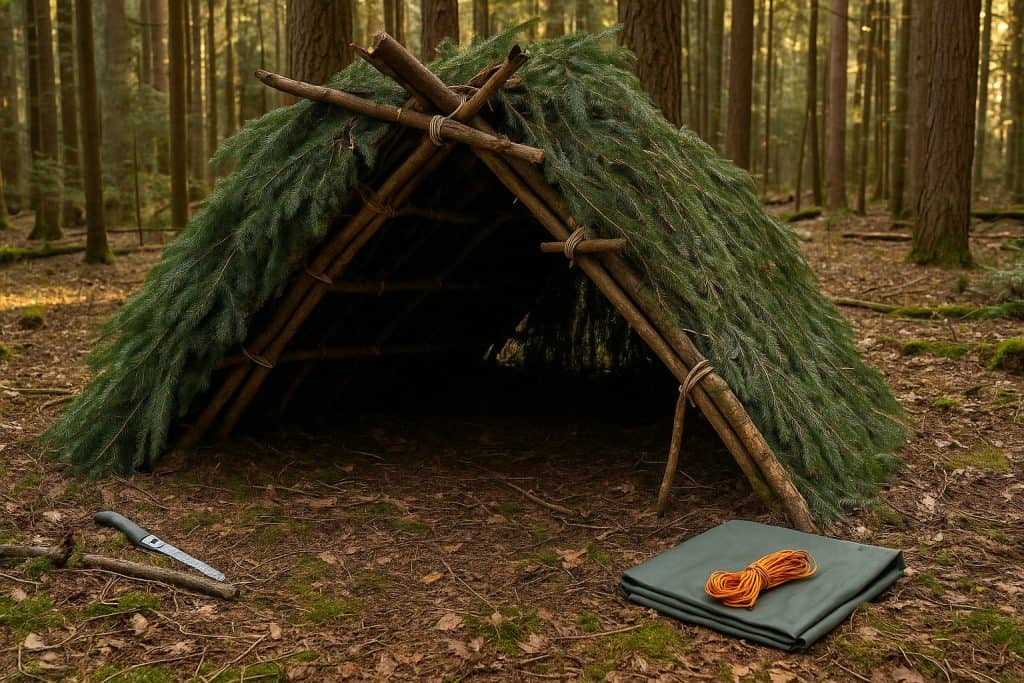
- Lay branches, leaves, and pine boughs over the ribs to make a solid wall. The thicker, the better. Aim for at least 12 inches of coverage if you’re going natural.
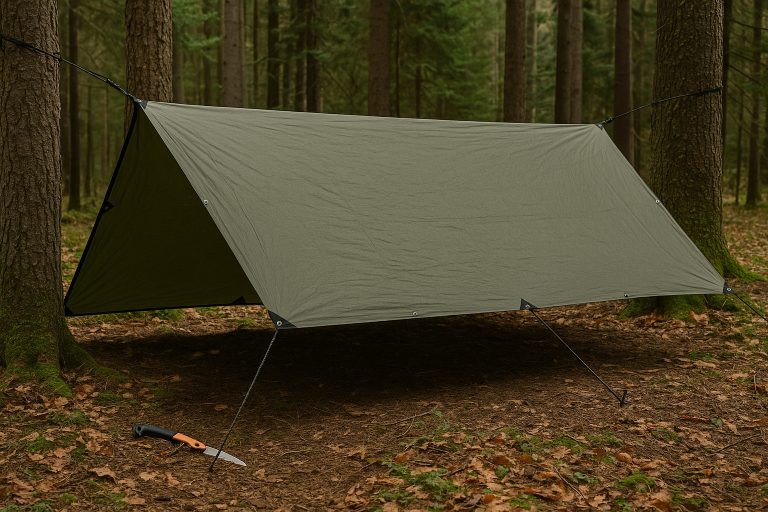
- If you have a tarp, drape it over the shelter and secure it with paracord or weighted logs.
- Create a bed of leaves or pine underneath you. Cold ground sucks away body heat faster than wind. A sleeping pad or wool blanket helps, but natural insulation works too.
🛖 Other Shelter Types Worth Knowing
While the lean-to is the go-to beginner option, it’s not your only choice. Different climates, terrain, and available materials may make another structure more effective.
- A-frame: Similar to a lean-to but with two sides sloped toward each other. Offers better protection from wind and rain on both sides.
- Debris Hut: Completely natural, compact, and warm. Build a ridgepole like the lean-to, but layer thick debris all the way around and leave just enough room to crawl inside.
- Tarp Shelter: With a quality bushcraft tarp and paracord, you can create dozens of variations: plow-point, diamond fly, or even an enclosed tent-like shelter.
🔥 Optional: Add a Reflector Wall + Fire
If you’ve got the time, set up a small fire in front of your shelter and build a reflector wall on the opposite side. It’s just a line of logs stacked between two uprights, and it helps bounce heat back toward your shelter.
Check out our fire starter guide here.
🔥 Be sure to follow proper fire safety guidelines. The U.S. Forest Service Fire Prevention page is a great resource.
This setup can raise the temperature inside your shelter by 10–20 degrees in cold weather. Just be careful not to overdo it.
🧰 Gear You’ll Want (and Why)
| Gear | Why It’s Useful | Affiliate Link |
|---|---|---|
| Folding Saw | For cutting support poles | Check Price On Amazon |
| Paracord | Lashing and securing tarp | Check Price On Amazon |
| Tarp |
Waterproof shelter cover |
Check Price On Amazon |
| Bushcraft Knife | Notching, splitting, carving | Check Price On Amazon |
🏕 Practice Before You’re in Trouble
I’ve built shelters in freezing rain, after dark, and even while sick. Trust me—you don’t want your first attempt to be under pressure. Lessons on how to build a bushcraft shelter are best learned in good conditions with no pressure. One of the best things you can do is rehearse building a shelter when nothing is on the line.
Find a local wooded area or even a quiet patch in your backyard and challenge yourself. Can you set up a waterproof lean-to in 30 minutes? How long does it take to collect enough insulation?
👉 Before any trip, check the National Weather Service’s safety alerts to make sure you’re not walking into dangerous conditions.
🧍♂️ A Quick Word from Experience
I remember one trip early on—didn’t check the forecast, thought I could wing it. Got hit with an unexpected thunderstorm and tried to throw up a tarp between two trees I had no business using. Everything sagged, puddled, and eventually dumped cold water on my sleeping bag at 3 AM.
Since then, I’ve never gone into the woods without a tarp I trust, a backup roll of paracord, and a plan for a shelter. These are lessons you only need to learn once.
🏁 Final Thoughts
Building a bushcraft shelter is a skill that gets better every time you do it. Start small. Practice in your backyard or local woods. Add a tarp this time, go all-natural next time. The more you build, the more you’ll trust your gear—and yourself—when it really matters.
If you want to level up, check out our guide to the best bushcraft tarps—we’ll break down which ones are worth the weight in your pack.
Until then, keep your knife sharp and your thinking sharper.
Stay warm out there.