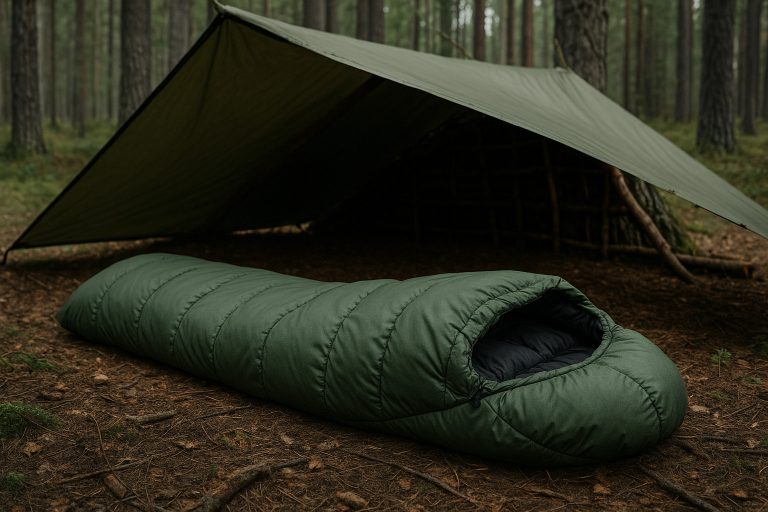
A tarp is more than just a square of fabric—it’s one of the most versatile tools in any bushcrafter’s pack. Whether you’re building a quick shelter, creating shade, covering gear, or collecting rainwater, the right tarp can be a game-changer. In this guide, we’ll explore the different types of bushcraft tarps, how to choose the right one, and why it should be a core part of your loadout.
Why Use a Tarp for Bushcraft?
Unlike tents, tarps give you full control over your shelter setup. You can pitch them low to the ground for wind protection, open them wide for ventilation, or layer them for added insulation. They’re lighter, more adaptable, and typically more affordable.
Common Bushcraft Tarp Materials
- Polyethylene: Cheap and waterproof, but noisy and not very durable.
- Silnylon: Lightweight and compact, though it can sag when wet.
- Polyester with PU coating: A great balance of durability and weather resistance.
- Ripstop Nylon: Highly durable and tear-resistant; ideal for long-term use.
Tarp Sizes and Shapes
For solo bushcraft, a 10×10-foot tarp offers excellent coverage. Larger sizes (12×12 or 10×12) are better for group shelters or creating dedicated cook areas. Shapes range from square to hex and diamond cuts—each with different pitching options.
🥇 My Go-To Tarp: Texas Bushcraft Emergency Tarp
If I could only take one tarp into the woods, this would be it.
The Texas Bushcraft Emergency Camping Tarp hits that sweet spot between durability, packability, and smart design. It’s made from tough 70D ripstop nylon, has a heat-reflective aluminized backing for colder nights, and includes 19 tie-out points with reinforced grommets. It even comes with paracord and stakes in the bag.
I’ve used it in thunderstorms, snow flurries, and hot Virginia summers. It holds up.
Comparison Table: Top Bushcraft Tarps
| Tarp | Material | Waterproofing | Weight | Highlight Feature |
|---|---|---|---|---|
| Texas Bushcraft Tarp | 70D Ripstop Nylon | Aluminized + PU Coating | Compact / Moderate | Heat-reflective layer + 19 tie-outs |
| DD Tarp 3×3 | Polyester | Taped Seams | Light | Versatile shelter configurations |
| Aqua Quest Defender | 70D Nylon | 20,000mm Waterproof | Heavy | Extreme weather durability |
| Free Soldier Tarp | Polyester | PU Coated | Light | Budget-friendly starter tarp |
| OneTigris Tarp | Ripstop Nylon | Water-resistant | Moderate | Camo/tactical aesthetics |
Quick Tarp Configurations Worth Practicing
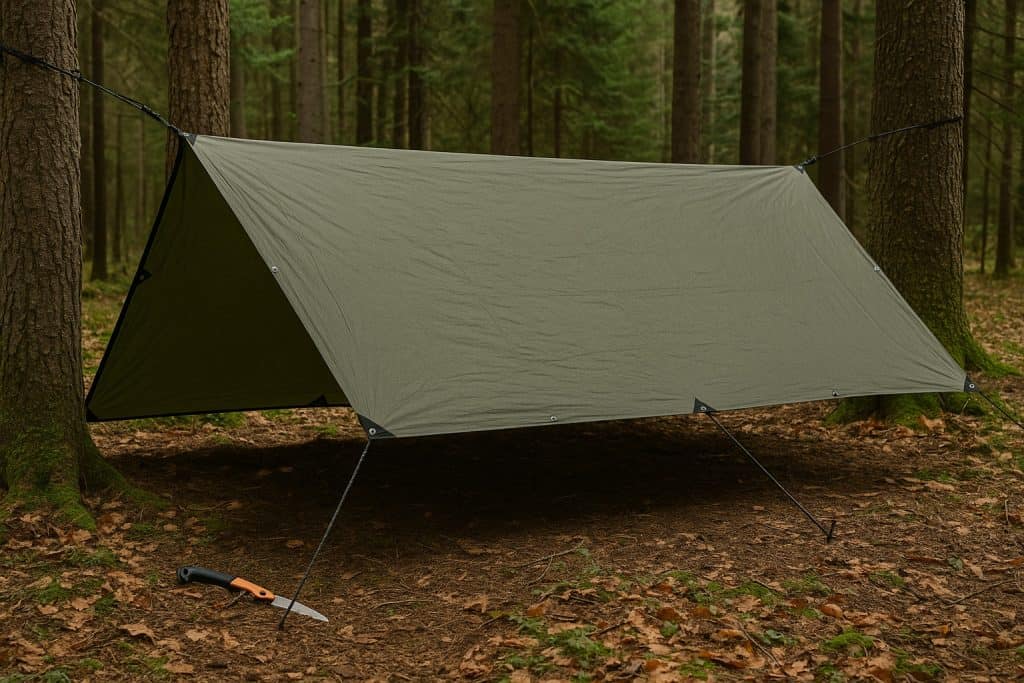
- A-frame: Great rain and wind protection
- Lean-to: Fast setup for sun and heat
- Plow point: Excellent in wind
- Diamond fly: Ideal for hammock shelters
🔍 Expanded: Choosing the Right Tarp for Your Conditions
- Wet climates: Choose a tarp with excellent waterproofing (minimum 2000 mm rating) and taped seams. The Aqua Quest Defender shines in this category.
- Cold weather: Aluminized or reflective backing helps trap warmth, especially when paired with a reflector fire. The Texas Bushcraft Tarp is ideal here.
- Hot, dry climates: Look for breathable setups that allow airflow and provide shade. Larger, lighter-colored tarps perform well.
- Mountain or high wind areas: Reinforced corners and multiple guy-out points help maintain structural integrity when winds pick up.
🧭 Real-World Lessons from the Field
One of the first times I took a tarp into the mountains, I underestimated the wind. I pitched a basic A-frame setup without angling into the breeze. That night, gusts caught one side and flipped half my shelter inside out. I spent 20 minutes at 2 AM tightening paracord lines in the rain with a headlamp.
Now, I always stake low to the ground and bring extra cordage just in case. Lessons like that are part of the process—and they’re why I preach practicing setups in your backyard before heading deep into the woods.
📐 More Shelter Configurations to Know
- C-Fly Wedge: Combines a groundsheet and partial lean-to for stealthy camping.
- Tent-style (closed ends): Offers more protection from bugs and sideways rain; requires more tie-outs.
- Awning setup: Perfect for day camps or cooking shelters; creates overhead protection with open airflow.
- Ridgeline with storm flaps: Extra tensioned edges help prevent sag and collect less rainwater.
🧪 Pros and Cons of Common Tarp Materials
| Material | Pros | Cons |
|---|---|---|
| Silnylon | Very lightweight, compact, good waterproofing | Can stretch/sag when wet, less durable under abrasion |
| PU-coated Polyester | Affordable, good water resistance, stable shape | Heavier, can delaminate over time |
| Ripstop Nylon | Durable, strong in wind, reliable | Slightly heavier and more expensive |
| Tyvek (DIY) | Inexpensive, waterproof, ultralight | Loud, stiff, limited tie-out flexibility |
📦 Bonus Gear to Pair with Your Tarp
- Adjustable trekking poles
- Shock cord loops
- Ground stakes
- Guylines and LineLocs
🧠 Final Tips for Tarp Success
- Always dry your tarp before storage.
- Use reflective corner markers at night.
- Practice knots: Taut-line hitch, trucker’s hitch, bowline.
Helpful Resources
- How to Build a Bushcraft Shelter
- National Weather Service
- U.S. Forest Service
- Mastering Firecraft
- Essential Bushcraft Gear
Final Thoughts
A good tarp is the kind of gear that disappears into your pack until the moment you need it most. Whether you’re rigging a storm shelter, staying dry while making camp, or sleeping under the stars, the right tarp gives you the freedom to adapt.
If you’re only going to invest in one—make it one you trust. For me, that’s the Texas Bushcraft Emergency Tarp.