Bushcraft—the art of using traditional skills to live comfortably in natural environments—requires thoughtful preparation and the right equipment. What essential bushcraft gear do you need to begin your adventure? The answer depends on the nature of your trip. If you are only taking a hike in the woods, you will not need much of anything. If, however, you intend to spend the night in the woods, the list becomes longer and more important.
Unlike conventional camping where you might bring every comfort from home, bushcraft focuses on using minimal gear combined with natural resources and traditional skills. The right equipment supports these skills rather than replacing them.
I will go over what I consider to be the bare necessities for an overnight bushcraft camping or hiking trip. You could get by with less if you had to in a pinch, but your safety and enjoyment would decline to what is for me an unacceptable level.
Understanding Bushcraft Philosophy
Before diving into specific gear, it’s important to understand the philosophy behind bushcraft. Unlike traditional camping where you might bring every comfort from home, bushcraft emphasizes working with nature and developing skills to thrive in the wilderness. The gear you choose should support this philosophy—reliable, versatile tools that enable you to interact with your environment rather than isolate yourself from it.
Weather conditions and geographical location will significantly impact your gear choices. A summer trip in temperate woodlands requires different preparation than a winter excursion or desert adventure. Always research the specific environment you’ll be entering and adjust your kit accordingly. What works in the Pacific Northwest might be inadequate in the Southwest deserts or Appalachian Mountains.
Priority Rating of Essential bushcraft Gear
(5 = Absolutely critical, 1 = Helpful but optional)
- 5 – Knife: The foundation of bushcraft; enables countless tasks from shelter building to food preparation (Read our guide)
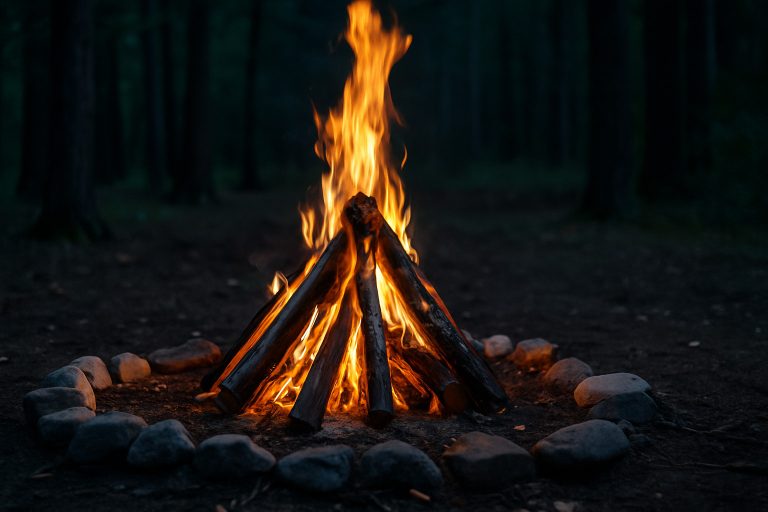
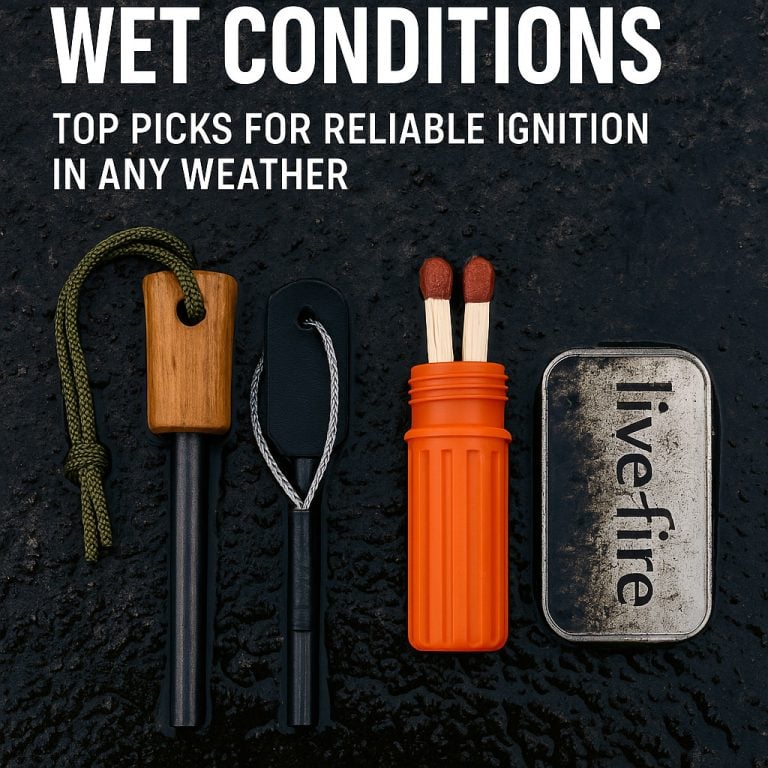
- 4 – Fire kit: Critical for warmth, cooking, water purification, and morale (See our picks)
- 4 – Water container & purification: Dehydration is a serious risk in any environment
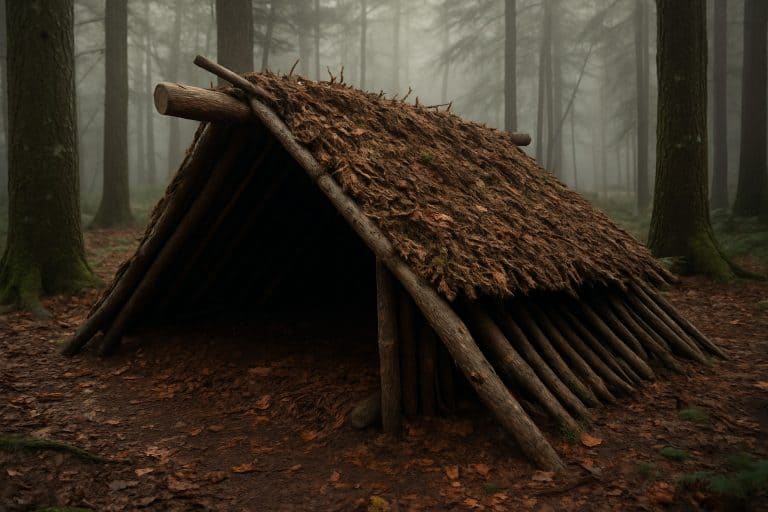
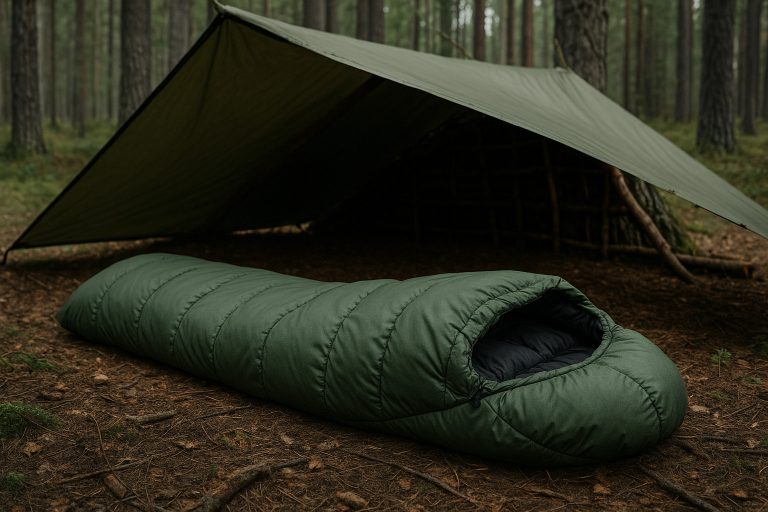
- 3 – Shelter system: Tarp, cordage and sleeping bag protect from the elements
- 3 – Navigation tools: Map, compass, and knowledge to use them
- 2 – Pack: Necessary for carrying gear but can be improvised
- 1 – Additional tools: Saw, hatchet, extra cooking equipment
Essential bushcraft Gear categories
This list is big enough that you will need a pack of some kind. I mention it first because it will carry everything else you will need, but that doesn’t mean I think it is the most important piece of gear. The most important piece of gear on this list is your knife. In my opinion there is nothing more important than your bushcraft knife. I will write another article about the different kinds of knives later, but I just wanted to put it in its place in this article.
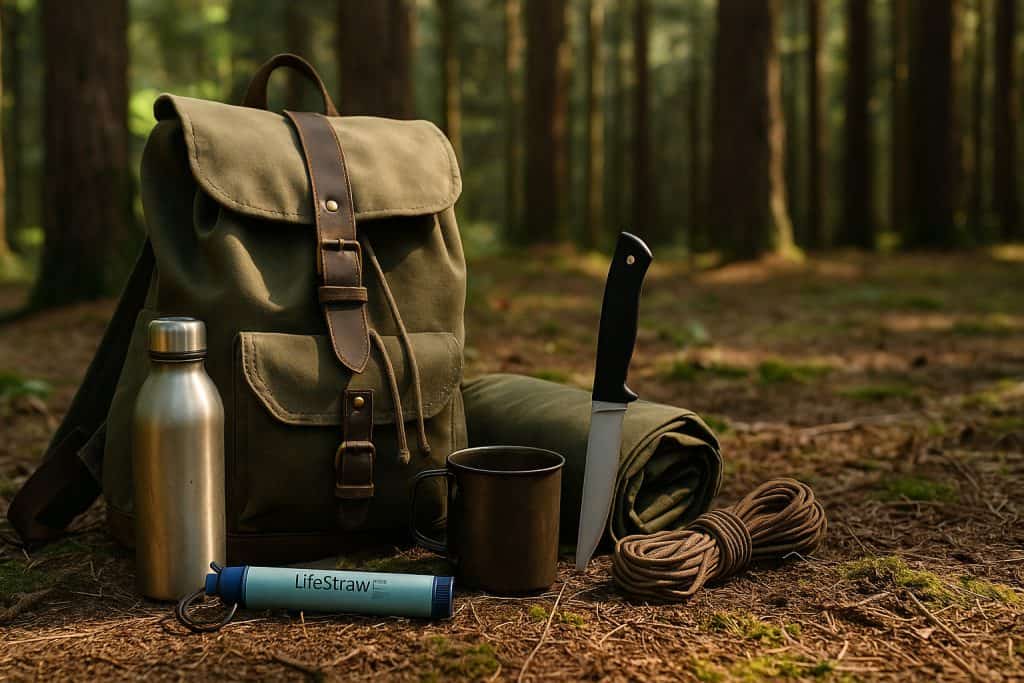
An overnight pack should include these essential items:
- Fixed-blade knife ($15-100): Models like the Morakniv Companion, Fallkniven F1, or ESEE-4 offer excellent value
- Knife sharpener: A simple stone or field sharpener
- Flashlight or headlamp with extra batteries
- Fire kit (multiple starting methods) Here is our guide for a basic fire kit.
- Compass: A quality baseplate model
- Paracord (50-100 feet)
- Tarp (minimum 9×9 feet)
- Resealable bags (gallon-sized)
- Sleeping bag appropriate for climate
- Water filter or purification method like the Sawyer Mini or LifeStraw
- Basic first aid kit
- Metal cup or small pot
For tips on layering for outdoor survival, check out this REI guide to layering for the outdoors.
The Pack: Your Mobile Home
Your bushcraft pack should be somewhat rigid. The biggest difference in packs is whether they have a frame or not. It doesn’t have to have a frame, but it does need to hold its shape. This isn’t a cosmetic issue. A pack has to hold its shape to provide support while being carried. A backpack that doesn’t have any support in it will cause fatigue while hiking. The heavier the pack, the more support it needs.
Look for water protection. The pack should keep your gear dry in wet conditions. Some have rubber coatings inside. Others use removable plastic liners. Either works well. The key is ensuring your essential gear stays dry during rain or accidental immersion.
When selecting a pack, consider the capacity you’ll need—typically 40-60 liters works well for overnight to weekend trips. Look for multiple compartments that allow for organization and easy access to frequently used items. External attachment points are invaluable for carrying bulkier gear like tarps or sleeping pads.
Quality materials and construction are worth the investment; ripstop nylon and reinforced stitching at stress points will extend the life of your pack considerably. Remember that your pack is essentially your mobile home in the wilderness, so choose one that balances comfort, durability, and functionality.
Cutting Tools: The Heart of Bushcraft
Your knife should be accessible on your belt rather than packed away. A fixed-blade, full-tang design provides reliability that folding knives cannot match. Blade length between 4-6 inches offers versatility for most bushcraft tasks.
Consider the blade steel carefully. High-carbon steels like 1095 or O1 hold an excellent edge and are easy to sharpen in the field but require more maintenance to prevent rust. Stainless steels like 440C or AUS-8 resist corrosion better but may be slightly harder to sharpen without proper tools.
Your knife sharpener can be as simple as a small whetstone or a purpose-built field sharpener. The ability to maintain your edge is just as important as having a good knife to begin with.
Fire Kit: Your Survival Insurance
Your fire kit deserves special attention. Fire provides warmth, cooking capability, and psychological comfort in the wilderness. See our picks for the best fire starters in wet conditions
Include multiple ignition methods for redundancy. A ferrocerium rod, waterproof matches, and a quality lighter give you options when conditions are challenging.
Tinder is equally crucial. Carry commercial firestarters or natural materials like birch bark in a waterproof container. More importantly, learn to identify and harvest natural tinder in your environment.
Shelter: Protection from the Elements
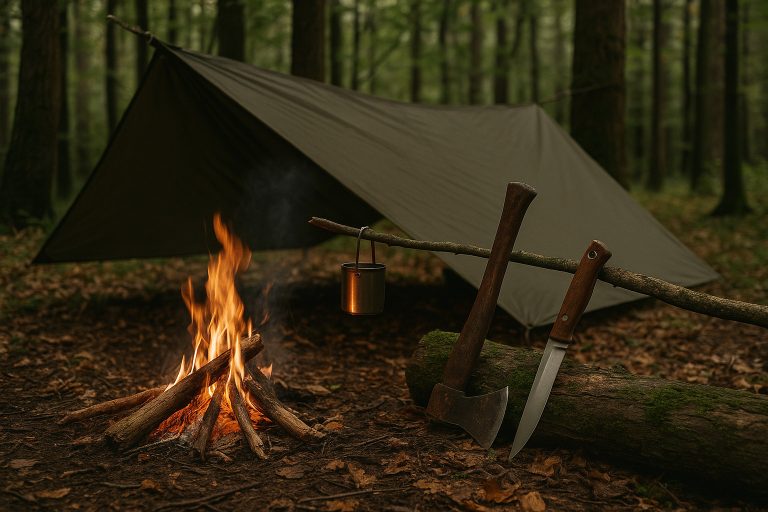
For shelter, imagine a quality tarp (preferably 9×9 feet or larger) suspended between two sturdy trees. As rain patters against the taut fabric, you remain dry on your elevated bed of spruce boughs. This simple setup offers versatility that rigid prefabricated tents cannot match. In minutes, you can reconfigure it from a lean-to in fair weather to a fully enclosed A-frame when the wind picks up.
Your sleeping bag should be appropriate for the lowest temperatures you expect to encounter. A good rule of thumb is to get a bag rated for 10-15 degrees lower than you anticipate. Remember that a sleeping bag is only as good as the ground insulation beneath it – a sleeping pad adds significant warmth in colder conditions.
Water: Your Most Critical Resource
A single-walled stainless steel container serves multiple purposes, from water collection to boiling for purification and cooking. While tablets or filters are convenient, knowing how to purify water through boiling is an essential backup skill.
Modern water filters like the Sawyer Mini ($20) or LifeStraw ($25) are lightweight, affordable options that can process thousands of liters before replacement. Chemical treatments provide a good backup but affect taste.
Navigation Tools: Finding Your Way
A quality compass and map are non-negotiable. Even if you carry a GPS device, these analog tools never need batteries and work in all conditions. Learn to take and follow bearings, read topographic features, and triangulate your position. Don’t skimp here. This is the best compass I have ever used.
Additional Helpful Items
Other things you could add but are not really necessary are: a handheld GPS, machete, hatchet, saw, and sleeping pad. I will be talking about each of these items in more detail in other articles.
Clothing, while not typically considered “gear,” is your first line of defense against the elements. Prioritize moisture-wicking base layers, insulating mid-layers, and weather-resistant outer layers. The adage “cotton kills” is worth remembering; natural fibers like wool or modern synthetics perform better in wilderness conditions.
Knowledge: Your Most Reliable Tool
The most essential bushcraft gear isn’t something you buy. A handheld GPS unit is great, but you should always bear in mind that it is a piece of gear. All bushcraft gear has one thing in common: They will all eventually fail.
I have personally experienced a GPS failure in the field. I was hunting mule deer in southern Wyoming in an area I had never been before. I had just finished my hunt for the morning and was getting ready to go back to camp and rest some before the evening hunt. I got my GPS unit out and pushed the power button. Nothing happened. I changed the batteries. Still nothing. Fortunately, I had my compass.
I think I could have gotten back without my compass because I knew the road I needed to get back to was roughly south, but it would have taken me much longer. The sky was very overcast and it is pretty disorienting to be in the mountains in thick Aspen thickets. Just remember that all gear can and will fail, and when it does, you will have to replace it with knowledge.
Beyond these essential tools, knowledge remains your most valuable resource. The more you understand about natural resources and traditional techniques, the less gear you’ll need to carry. Check out how to make char cloth in the wild.
Books on local plants and animals, traditional wilderness skills, and regional outdoor knowledge should be studied before your trips. Joining local bushcraft groups or taking workshops can accelerate your learning curve significantly.
Practice your skills in controlled environments before relying on them in remote settings. The confidence and competence you develop will be far more valuable than any piece of equipment you might purchase. Remember that our ancestors traveled through and lived in these environments with far less manufactured gear than we typically carry today.
Conclusion
As you prepare for your bushcraft adventures, remember that gear is only a means to an end. The true essence of bushcraft lies in developing a relationship with the natural world, learning to read the landscape, and using simple tools effectively. Start with the essentials outlined here, then gradually refine your kit based on personal experience and the environments you explore.
While modern equipment offers convenience, the most satisfying bushcraft experiences often come from doing more with less and relying on skill rather than gear. Pack thoughtfully, practice regularly, and most importantly, get out there and enjoy the journey of reconnecting with traditional skills in natural settings.
See you out there!