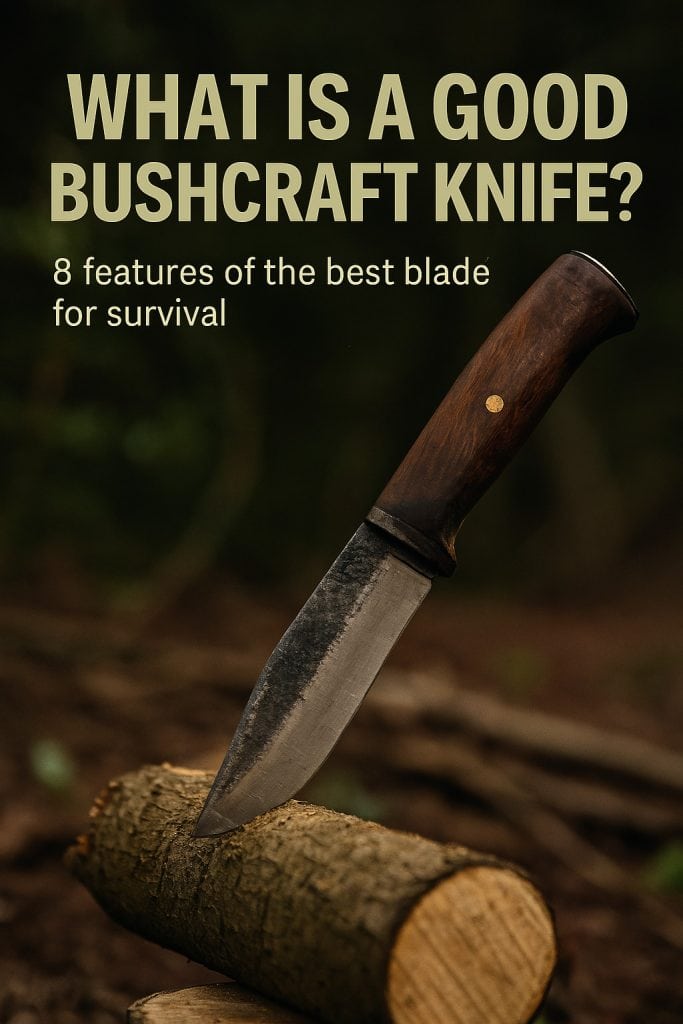
Your definitive guide to the best blade for survival in the wilderness.
🔥 Introduction
Your knife on a wilderness trip is not a tool — it’s your lifesaver.
Shaping feather sticks, making tinder, field dressing game, building shelter — whatever you have to do when you’re out in the wild, a good bushcraft knife truly does make a difference.
But just what is a good bushcraft knife?
Let’s deconstruct the key features and show you how to choose a durable, long-lasting, and affordable blade — with Amazon suggestions in tow.
1. Full Tang Construction
Full tang is metal that extends all the way through the handle.
- More strength for batoning
- More stamina when chopping or prying
- Better balance in hand
✅ Find: Morakniv Garberg (full tang, carbon steel)
2. Blade Steel: Carbon vs. Stainless
Carbon Steel
- Easy to sharpen
- Holds a fine edge longer
- Can rust — requires oiling
Stainless Steel
- Rust-resistant
- Slightly less edge retention
- Lower maintenance
Our tip: Carbon steel is ideal if you’re comfortable maintaining your gear. Stainless is better for wet conditions or beginners.
3. Blade Thickness & Length
- Length: 3.5″–5″ is the sweet spot
- Thickness: ~⅛” (0.125″) is perfect for versatility
Too thin = not sturdy for chopping
Too thick = poor slicing performance
4. Drop Point Blade Shape
Drop point blades are versatile, strong at the tip, and ideal for bushcraft.
Avoid blades with exaggerated curves, gut hooks, or heavy serrations — those are better for tactical or hunting-specific roles, not general survival.
5. 90-Degree Spine
A squared spine lets you:
- Strike a ferro rod
- Scrape bark and tinder
Rounded spines = useless for fire starting.
✅ Bonus: Some bushcraft knives come pre-sharpened on the spine for this purpose.
6. Ergonomic, Non-Slip Grip
- Look for rubber, micarta, or grippy polymer
- Avoid hollow handles (they tend to be flimsy)
- Watch for hot spots when carving — blisters will develop quickly on uncomfortable grips
Need amazing grip? Morakniv Companion HD features an excellent rubberized feel.
7. Low-Maintenance Sheath
A good sheath will:
- Keep the knife securely in place
- Fit belt carry
- Be made of molded polymer or heavy leather
8. Weight and Balance
A quality bushcraft knife will be an extension of your hand. You should have it:
- Heavy enough for chopping and batoning
- Light enough for small work and carving
🔪 Recommended Budget Bushcraft Knives
| Knife | Steel | Tang | Price |
|---|---|---|---|
| Morakniv Companion | Carbon | Partial | ~$20 |
| Schrade SCHF36 | High Carbon | Full | ~$35 |
| Condor Bushlore | 1075 Carbon | Full | ~$50 |
| Morakniv Garberg | Stainless | Full | ~$80 |
🛒 All found on Amazon — throw ’em in your fire kit or bug-out bag.
🧭 Final Thoughts
The best bushcraft knife is not about flash — it’s about functionality. Keep things simple:
- Full tang
- Carbon or stainless steel
- Good grip
- Strong sheath
- 90-degree spine
You don’t have to spend $200. A $40 knife with good specs will last you years.
If you would like more information on what to look for in a knife, see here.