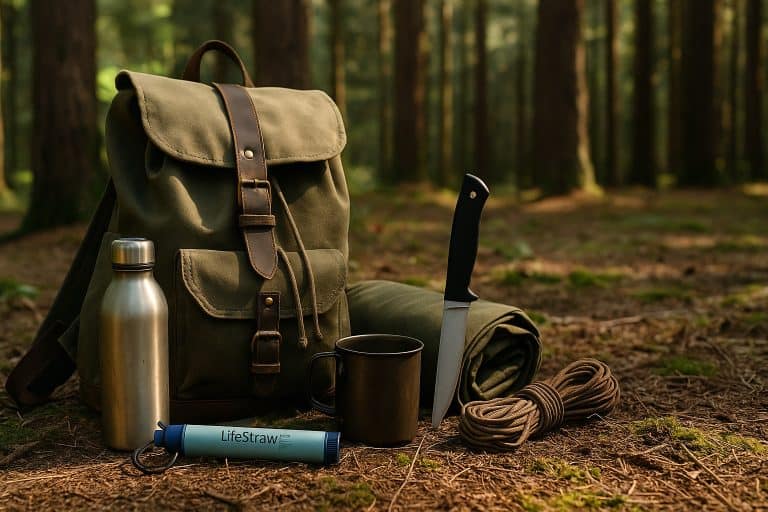
When surviving in the wild, food can wait — but clean drinking water cannot. Without access to safe water, dehydration, fatigue, and life-threatening disease can take hold in a matter of days.
Understanding bushcraft water purification methods could quite literally save your life when it counts
Today, we’ll break down simple, proven techniques you can use to get safe drinking water in the wild — even with minimal gear.
Before you head out, make sure your survival kit contains reliable fire-starting equipment. Check out our bushcraft fire kit guide to be ready for anything.
Why Clean Water Matters in Bushcraft
Water isn’t a luxury — it’s survival.
The rule of threes dictates you can survive:
- 3 minutes without air
- 3 days without water
- 3 weeks without food
In nature, water is often teeming with bacteria (including E. coli), parasites (including Giardia), and even viruses. Contaminated water ingestion causes severe illness that exacerbates dehydration, which makes a bad situation far worse.
Waterborne illness is among the leading causes of illness in the wilderness, as stated by the CDC.
Even if water looks crystal clear, it can harbor unseen threats. Water purification must become second nature to the serious bushcrafter.
Primitive Water Purification Techniques
Before we had fancy filters and chemical tablets, people used simple techniques to purify water for drinking.
These are the bushcraft basics:
1. Boiling
- How: Boil water at a rolling boil for a minimum of 1 minute (or 3 minutes over 6,500 ft above sea level).
- Why: Destroys bacteria, viruses, and parasites with heat.
- Tip from the real world: Double-boil if your container is unclean — once to purify the container, once for real water.
Boiling is tested and true. Dry your firewood during cold weather and take longer to boil larger quantities.
2. Charcoal Sand Filter
- How: Layer sand, charcoal, and gravel in a container. Add water to filter out dirt and large microbes.
- Why: Physical filtration excludes trash and some microbes.
- Real-life tip: Use charcoal from your fire — crush it up well between rocks if needed.
A homemade filter improves water clarity and taste, but always use it together with boiling where possible.
3. Solar Still
- How: Dig a pit, place a container at the center, cover the pit with plastic sheeting weighted in the middle. Collect evaporated water.
- Why: Useful in desert or low-water environments.
- Real-world tip: Adding green vegetation inside the pit can boost water yield.
Solar stills are slow — expect only a few ounces per day — but when you’re desperate, every drop counts.
Modern Bushcraft Water Purification Tools
Today’s technology offers lightweight, reliable solutions perfect for bushcraft.
LifeStraw Personal Water Filter
- Pros: Ultra-lightweight, no chemicals needed, drink straight from the source.
- Cons: Primarily single-user, not great for large quantities.
👉 Check current price on Amazon
Sawyer Mini Water Filter
- Pros: Filters up to 100,000 gallons, very compact, highly versatile.
- Cons: Needs regular backflushing to stay effective.
👉Check current price on Amazon
Water Purification Tablets
- Pros: Lightweight, easy to carry, kills most biological contaminants.
- Cons: Wait time required, chemical aftertaste common.
👉 Check current price on Amazon
Boil Kits (Metal Cups + Fire Starter)
- Pros: Extremely reliable, no chemicals needed, unlimited use.
- Cons: Heavier setup than a straw or tablet system.
👉 Check recommended survival boil kits
How to Choose the Best Water Purification Method
Choosing the right method depends on your situation:
| Factor | Best Option |
|---|---|
| No fire ability | LifeStraw or Sawyer Mini |
| Freezing temperatures | Boiling or tablets (filters can freeze) |
| Fast moving water | Filter + boiling (double-check for sediment) |
| Desert environments | Solar still (only if no better option) |
No two bushcraft trips are identical — tailor your water plan to your landscape, climate, and available tools.
Best Practices for Water Collection
Purification is only part of the battle. Smart collection improves your chances:
- Prefer moving water: Streams and rivers over ponds and lakes.
- Collect upstream: Walk away from campsites, animal trails, or livestock.
- Pre-filter dirty water: Use a cloth or T-shirt as an initial barrier before filtering or boiling.
- Plan daily water stops: Don’t wait until you’re desperate and dehydrated.
Pro tip: Always carry at least two methods of purification in case one fails. Bushcraft water purification methods are too important to be left to chance. (for example, a LifeStraw plus purification tablets as a backup).
Common Mistakes in Purifying Water
Even experienced bushcrafters make mistakes. Steer clear of these pitfalls:
- Assuming clear water is clean (it isn’t).
- Skipping purification when you’re tired.
- Using broken or clogged filters without checking them.
- Not carrying a secondary system.
Water safety requires self-discipline. Never let convenience or fatigue guide you into risking it.
Last Words
Learning bushcraft water purification methods translates to learning survival itself.
Water is life — and getting clean water should be as second-nature as camp creation or fire making.
Practice those skills regularly, and don’t do it in just one way.
One of the most important skills a survivalist can develop is adaptability — and that goes for how you acquire, filter, and move life-saving water.
👉 What are your preferred bushcraft water purification methods when venturing out in the wilderness?
Drop your tips and tricks in the comments — we’d love to hear them!